What makes an anti-raid sky settlement work in Rust?
You can order the same kind of articles for your own video to boost it on YouTube and Google. Just message the Telegram bot @sat_sit_bot. Articles with your video embedded are written and posted by the bot itself — on popular topical sites (no ads). Free trial — 50 articles.
· based on the channel Willjum
Key takeaways
- An anti-raid sky settlement in Rust is a base built high above the ground so raiders must spend extra resources to reach and breach it.
- Elevation forces attackers to use ladders, parachutes or helicopters and exposes them to counters from the defenders.
- Sky bases rely on stacked foundations, external TCs and bunker loot rooms to make the main stash hard to find.
- Raid cost rises with honeycomb layers, armoured doors and shotgun traps placed to cover approach routes.
- Willjum's video shows the concept in a solo survival context, not a guaranteed unraidable design.
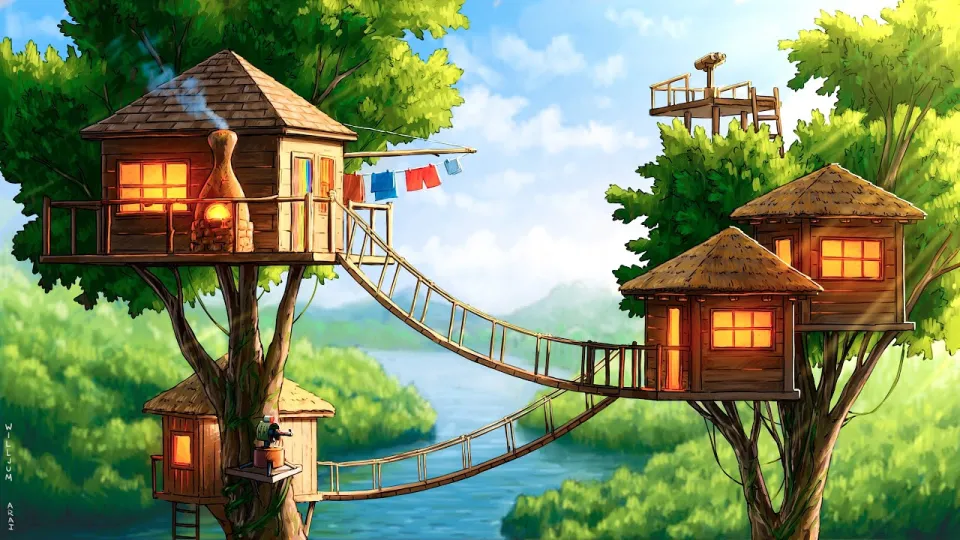
An anti-raid sky settlement in Rust is a base built high above the terrain so that raiders must spend extra time, explosives and exposure to reach the loot. In practice it combines elevation, layered defences and a bunkered core, and Willjum's build video shows how those ideas come together in a solo survival run. The goal is not to be unraidable but to make the raid cost more than the loot is worth — and to give the defender time to respond. You can support more builds like this through Willjum's Patreon page: support Willjum on Patreon.
Why build a sky settlement instead of a ground base in Rust?
A sky settlement changes the raid equation by adding a vertical approach that most raid tools are not designed for. On flat ground, a raider can park a raid base nearby, blow through walls and retreat under cover. A structure suspended on tall foundations or built on a cliff edge forces attackers to climb, which slows them down and puts them in the open. In Rust, most explosives are thrown or placed at close range, so a defender who controls the high ground can use traps and sightlines to punish anyone coming up. The trade-off is that the builder must solve stability, upkeep and access problems that a ground base never faces.
How does elevation change the raid cost in Rust?
Elevation raises the raid cost because every layer of vertical distance must be crossed with ladders, parachutes or a helicopter. A raider who expects to blow one wall and walk in now needs to bring building plans, ladders and enough explosives to breach a structure that may have no natural floor to stand on. High foundations also make it harder to place a raid base close enough for a clean angle, and they expose the attacker to fire from above. In practice, the defender should calculate the cheapest path a raider could take and add one more obstacle there — a ladder hatch, a trap or an extra wall.
What are the core components of an anti-raid sky base in Rust?
A working sky settlement is assembled from a small set of components that each solve a specific problem. The list below is a practical checklist rather than a strict blueprint:
- Stable foundation stack. Use foundations and pillars to raise the main structure, and check stability in the building menu before committing resources.
- External tool cupboard. Place the TC outside the main loot area so a raider who breaks in does not immediately gain building privileges.
- Bunkered loot room. Hide the core stash behind a false wall or a drop-down bunker so that a single breach does not expose everything.
- Layered honeycomb. Add cheap walls around the core to absorb explosives and force multiple breach points.
- Traps on approach routes. Shotgun traps and flame turrets cover ladders, ramps and the likely landing zone for parachutes.
- Redundant access. Keep at least two ways in and out so a blocked ladder does not trap the defender.
How do you defend a sky settlement during an online raid in Rust?
Defending a sky base is about controlling the approach, not just the walls. When a raid starts, the defender should first confirm where the attackers are staging — usually a raid base on the ground or a nearby cliff — and then use the height advantage to interrupt their setup. Traps placed on ladders and landing zones buy time, while the defender can repair or replace walls from inside the core. Because the structure is elevated, attackers often cannot bring heavy weapons to bear without exposing themselves, which gives the defender chances to counter-push. The main risk is being cut off from the tool cupboard, so a second TC or a stash of building materials near the core is worth the upkeep.
What do viewers commonly ask about Willjum's Rust builds?
Viewers often ask whether a sky base is actually practical for a solo player, and the honest answer is that it depends on upkeep and time. A large elevated structure costs more in maintenance than a compact ground base, so solo players usually scale the design down to a core tower with a few outer layers. Another common question is whether such bases are unraidable; no design in Rust is, and the point of an anti-raid layout is to raise the cost and delay the attackers. People also ask how much of the video is edited storytelling versus raw gameplay — Willjum's format is a narrated survival story built around real play, so the tactics shown are grounded in the game's mechanics even when the pacing is tightened for video.
Useful links
Final thoughts on anti-raid sky settlements in Rust
An anti-raid sky settlement works best as a cost multiplier rather than a fortress: elevation, bunkers and traps make raiders spend more than they expect. Willjum's build video is a useful case study because it shows the concept inside a solo survival run, where upkeep and time pressure are real constraints. The takeaway for players is to design around the cheapest raid path and add obstacles there, then keep the core small enough to maintain. For more builds and survival stories, follow Willjum's channel and consider supporting the channel on Patreon.
Source: I Built an anti raid sky settlement in Rust... · Markdown version
Questions & answers
Is an anti-raid sky settlement actually unraidable in Rust?
No base in Rust is truly unraidable. A sky settlement raises the cost and time required to raid by forcing a vertical approach and layering defences, but a determined group with enough explosives can still break in. The practical goal is to make the raid unprofitable or slow enough for the defender to respond.
Can a solo player maintain a sky base in Rust?
Yes, but it usually requires scaling the design down. A compact elevated core with a few honeycomb layers costs far less upkeep than a sprawling settlement. Solo players should prioritise a bunkered loot room and an external tool cupboard over cosmetic size.
What should a sky base include to stop raiders from reaching the loot?
The key components are a stable foundation stack, an external TC, a bunkered core, layered walls and traps covering ladders and landing zones. Redundant access routes also matter so the defender is not trapped inside during a raid.
Do I need to play Rust to enjoy Willjum's videos?
No. Many viewers watch for the storytelling and the survival narrative rather than the mechanics. The builds and tactics shown are grounded in real gameplay, but the videos are edited as weekly stories, which makes them accessible to people who have never played.